Customer expectations have changed dramatically. Today’s customers want instant responses, personalized support, and seamless experiences across channels. At the same time, support teams are under pressure to handle growing volumes without increasing costs.
Artificial intelligence (AI) helps bridge this gap. When applied strategically, AI enhances customer support by improving speed, accuracy, efficiency, and agent performance—while maintaining a human-centered approach.
Below are the key steps to successfully enhance customer support with AI.
Step 1: Identify the Right Use Cases for AI
Not every support task should be automated. Start by identifying areas where AI can deliver the most value.
High-impact AI use cases include:
- Handling FAQs and repetitive queries
- Routing and prioritizing tickets
- Assisting agents during live interactions
- Analyzing customer sentiment and feedback
Focusing on the right use cases ensures faster ROI and smoother adoption.
Step 2: Implement AI Chatbots for Instant Support
AI-powered chatbots are often the first step toward AI-driven customer support.
They help by:
- Providing 24/7 assistance
- Reducing wait times
- Handling high-volume, low-complexity queries
Modern chatbots learn continuously, improving accuracy and relevance over time.
Tip: Always enable a seamless escalation to human agents for complex or emotional issues.
Step 3: Automate Ticket Routing and Prioritization
Manual ticket triage slows down resolution times. AI can automatically analyze customer requests to determine intent, urgency, and sentiment.
Benefits include:
- Faster response times
- Better first-contact resolution
- Reduced agent workload
Customers get connected to the right agent at the right time.
Step 4: Use AI to Assist Support Agents in Real Time
AI doesn’t just help customers—it empowers agents.
AI-powered agent assist tools can:
- Suggest responses during live chats or calls
- Recommend relevant knowledge articles
- Generate automatic summaries and notes
This reduces cognitive load, shortens training time, and improves consistency across teams.


4
Step 5: Personalize Customer Interactions at Scale
AI analyzes customer history, preferences, and past interactions to personalize every engagement.
This enables:
- Context-aware conversations
- Reduced repeat contacts
- Stronger customer relationships
Personalization becomes scalable—without adding manual effort.
Step 6: Leverage AI for Proactive Support
Instead of waiting for customers to report issues, AI can detect patterns that signal potential problems.
Proactive AI support helps teams:
- Identify churn risks early
- Notify customers before issues escalate
- Reduce inbound support volume
This shifts customer support from reactive to predictive and proactive.
Step 7: Use AI Analytics to Drive Continuous Improvement
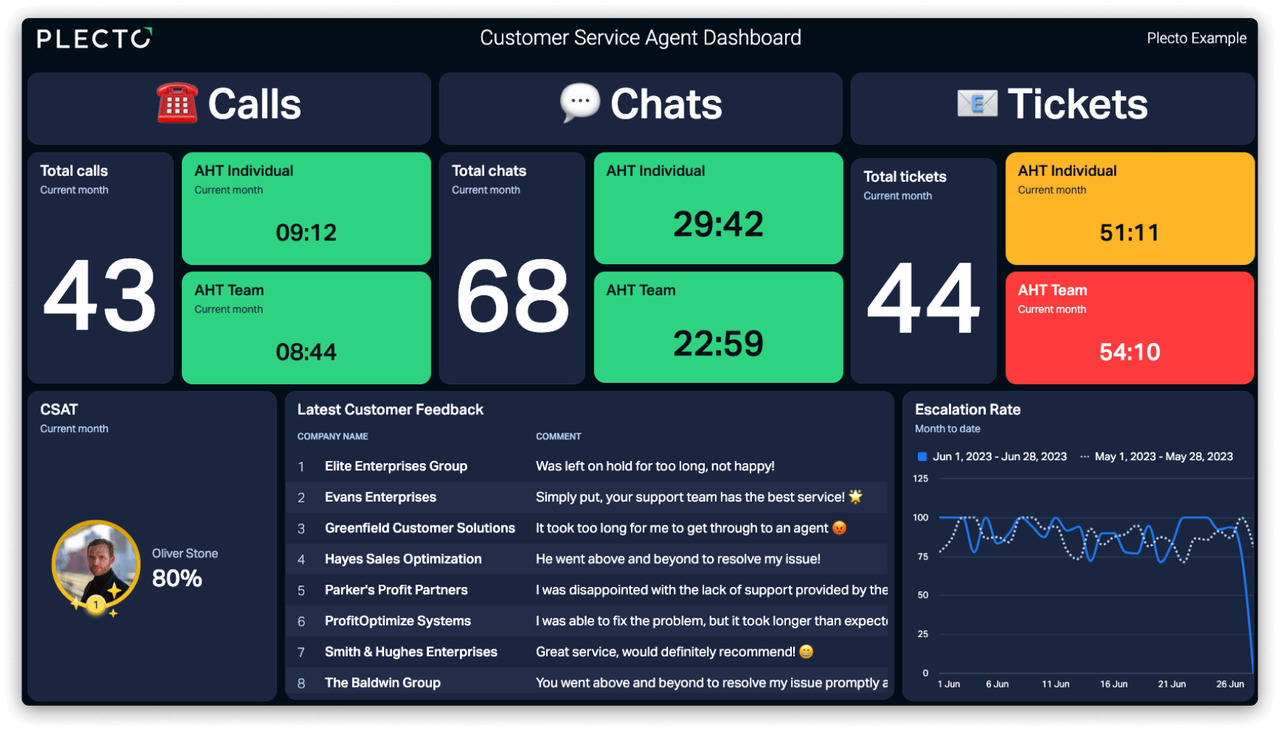
AI transforms raw interaction data into actionable insights.
Support leaders can monitor:
- Customer sentiment trends
- Resolution bottlenecks
- Channel performance
- Agent effectiveness
These insights enable continuous optimization of processes, workflows, and CX strategies.
Step 8: Balance Automation with Human Empathy
While AI improves efficiency, human empathy remains essential.
Best practices include:
- Automating routine tasks
- Escalating complex or emotional cases to humans
- Using AI to support—not replace—agents
The strongest customer support strategies combine AI efficiency with human understanding.
Step 9: Train Teams and Manage Change
Successful AI adoption depends on people, not just technology.
Ensure:
- Agents are trained to use AI tools confidently
- Clear communication about how AI supports their roles
- Ongoing feedback and optimization
When agents trust AI, adoption and impact increase significantly.
The Future of Customer Support Is AI-Augmented
AI is no longer optional—it’s becoming the foundation of scalable, high-quality customer support. Organizations that follow a structured, thoughtful approach to AI adoption will deliver faster resolutions, happier agents, and more loyal customers.
About Us : Contact Center Technology Insights is a leading platform delivering expert insights and trends on modern contact center technologies, CX innovation, and AI-driven customer engagement. We help decision-makers stay informed and ahead in the evolving customer experience landscape.
Know More : https://contactcentertechnologyinsights.com/news-analysis
Comments
Post a Comment